
Canadian Loves His Big Bug Zapper
“I wouldn’t be without it,” says Lloyd Kerr about his Gardner Insect Electrocuting System. “We have a lot of mosquitoes in this part of Saskatchewan and this unit kills enough of them to ¿ ll baler twine boxes.”
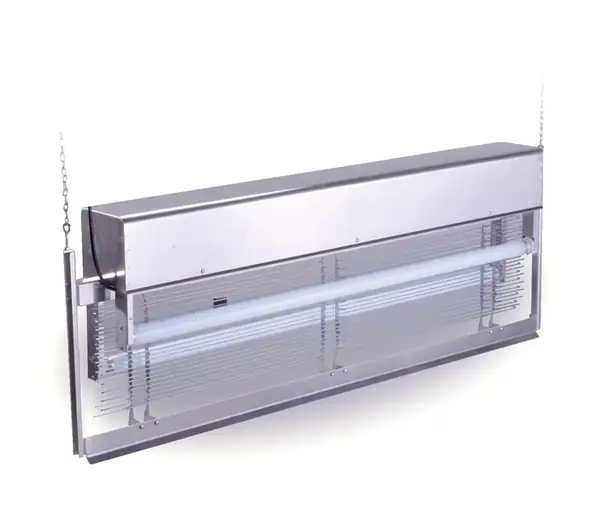
Kerr spent $600 for the AG661-30 heavy-duty model and says it was well worth it. At 93, he’s tried a lot of other products over the years and nothing else has come close.
Made of heavy-duty aluminum, the unit is suspended in the air so it works in both directions, says Verl Joch at Gardner in Horicon, Wis. He notes that Gardner pioneered Zap, the ¿ rst insect electrocuting system in 1938, using an incandescent light bulb. Today’s units use À uorescent black lights. Flying insects are drawn to the wavelengths that only they can see. The idea is to attract them before they go where people are. They’re used everywhere from stadiums, boat docks, parking lots and mosquito-wealthy farms in northern Canada. In a dairy barn, the AG661 insect electrocutor covers about a 60-ft. radius, for example.
Joch notes there are a few factors for effectively using the units: having enough units for the space, proper location and changing the bulbs, which start to lose their effectiveness after about 12 months of use.
“You want to get them in early in the season. In the Upper Midwest that’s by adults before they lay eggs.”
Changes in agriculture, such as using huge exhaust fans, have reduced the need for electrocutors in many facilities. Most of the systems the company sells are enclosed units for food service and sensitive areas where the dead insects must be contained.
But for folks like Kerr, the open grid unit works perfectly.
Joch notes that the AG661 model is still available ($520 suggested retail). It’s the same model Kerr has except it has a smaller transformer. Gardner Products, 100 Industrial Dr., Horicon, Wis. 53032 (ph 888 558-1990; www.gardnerep.com).
Reader comments